
Contact us today to get started with a free quote!
.png)

Replacing North Shore Windows Without Losing Your Home’s Character
Stand beside an east-facing window in Winnetka on a windy January afternoon, and you can feel Lake Michigan pressing against the frame. If the sash sticks and the trim feels cold, choosing a new window is only half the job
Many homes in Kenilworth, Winnetka, and Glencoe are historic, architect-designed, and built with a level of craftsmanship that’s rare today. Their windows should be held to that same standard. When an old sash begins to stick, rot, or bleed heat, a pocket insert sounds like the tidy fix. But pocket inserts can cost you visible glass and leave old sash-weight pockets uninsulated.
The goal is to keep the home’s proportions while dealing with drafts and lakefront weather. Pella replacement windows offer wood interiors and exterior cladding suited to the job, but the product line and installation method both matter.
Check the Local Rules Before You Choose a Window
The three villages do not handle exterior changes in exactly the same way. Before you settle on a window or installation plan, check what applies to your house.
The Pocket Insert Trade-Off: Less Mess, Less Glass
The mistake I see most often on classic North Shore homes is choosing a pocket replacement without seeing what it leaves behind. The crew keeps the existing wooden jambs and interior casing, removes the old sashes, and slides a self-contained window into the opening. That usually means a faster job and less plaster dust, but a thicker-looking frame. Pocket inserts can shrink the visible glass area by 1.5 to 3 inches on every side. On a tall double-hung window with historic trim, the result can look squatty from the street.

The bigger problem may be behind the woodwork. Older homes in Kenilworth and Winnetka can have cast-iron sash weights hanging in hollow pockets beside the window. An insert alone does not insulate or air-seal those pockets. The new glass may feel fine while the trim beside it stays cold. A full-frame replacement, or a carpenter who opens the weight pockets, removes the weights, and insulates and air-seals them, can address the draft the insert alone cannot.
Where Pella Reserve and Lifestyle Each Fit
On a classic center-entrance colonial or an architect-designed home near Glencoe’s ravine bluffs, a bulky replacement can change the look of the whole exterior. Pella Reserve Traditional wood windows offer butt-joint sash carpentry, through-stile details, spoon-lock hardware, and beveled putty profiles that better suit period details. Reserve’s extruded aluminum exterior cladding adds a protective shell over its wood framing for wet, windy weather.
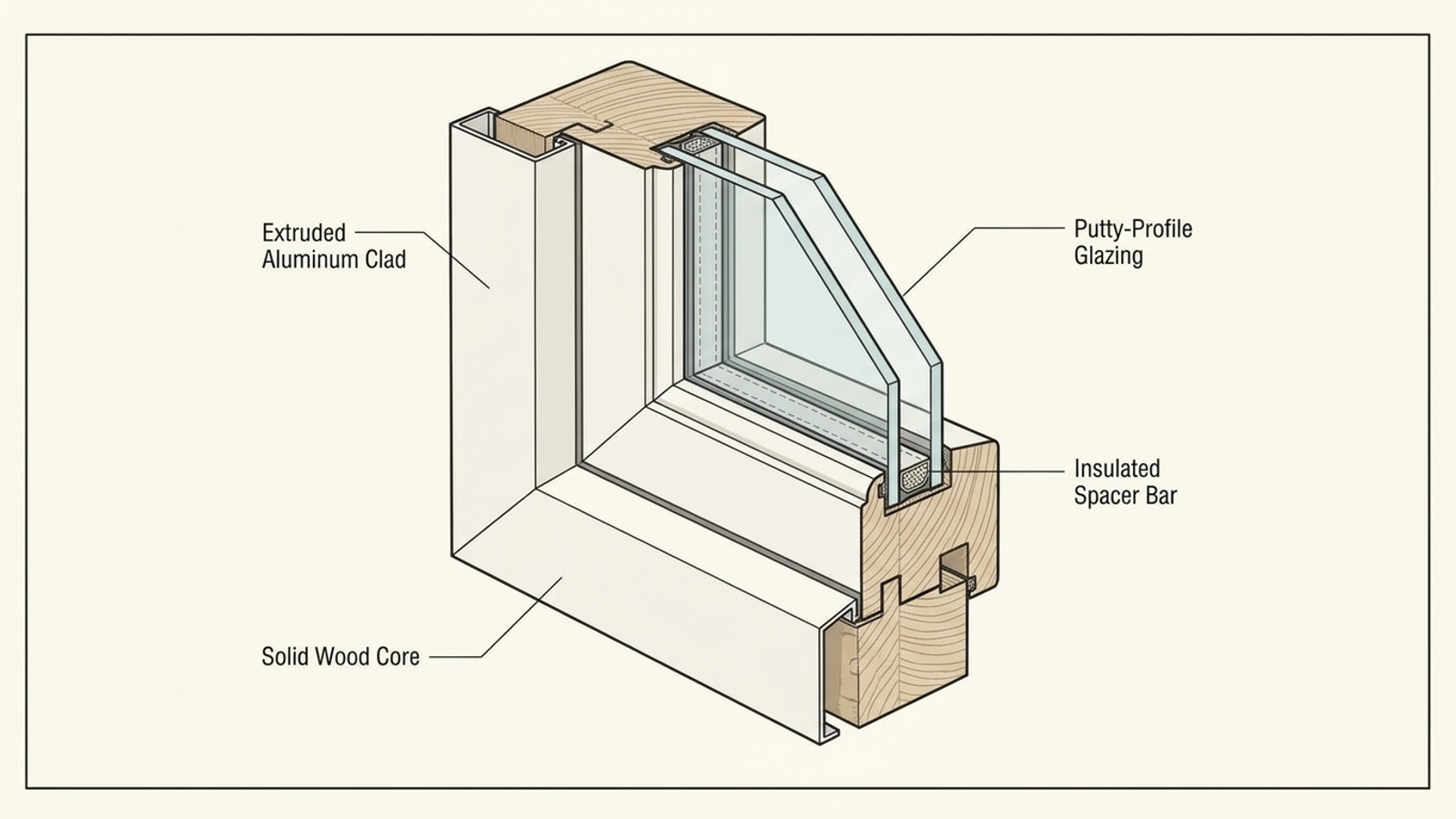
Not every opening calls for that level of architectural detail. On a secondary elevation or rear addition, Pella Lifestyle can be the more practical fit at a lower investment tier. It pairs wood interiors with roll-formed aluminum cladding. For rooms facing the Metra Union Pacific North line or Green Bay Road, its sound-control options are worth discussing: Pella Lifestyle Sound Control packages hold Quiet Mark Certification and use panes of differing thicknesses to help reduce outside noise compared with vintage single-pane glass.
That gives you room to mix the two lines. Reserve Traditional can preserve the street-facing façade where profiles and divided-light grilles carry the look of the house. Lifestyle can serve a bedroom facing the rail line or a back patio, where sound control, efficiency, or integrated blinds may matter more day to day. You do not have to make every window solve the same problem.
On Old Framing, the Install Makes the Difference
Here is what I learned the hard way working on vintage houses: a fine window will still disappoint you if the crew rushes the opening. A century of settling can leave frames out of plumb or square, and old plaster does not take kindly to a careless pry bar. If a crew wedges in a window, uses the wrong expanding foam, and covers the exterior with a quick bead of caulk, the jambs can bow and water can find its way behind the trim.
Look for a crew that plans for the opening it finds, not the one it expected. A skilled carpenter can shim the frame straight, use low-expansion foam made for window assemblies, and fit exterior casing so rain sheds away from the sill. That takes more care, and sometimes more mess, than sliding in an insert. It is worth discussing before work starts.
Ask Who Will Actually Do the Work
Contractor structure matters as much as the name on the glass. B.W. Construction & Home Improvement has worked on Chicagoland homes since 1997 and uses company-employed specialists rather than rotating subcontractor crews. We also hold the Pella Platinum Premier certification, which is the only such certification held by a contractor in Illinois. B.W. Construction backs its work with a two-year parts-and-labor warranty alongside Pella’s limited lifetime warranty terms.
If you only check one thing before signing, ask who will be holding the pry bar and level on day one. Then ask how that crew will handle old weight pockets and protect your interior trim. When you are ready to compare options for your house, ask B.W. Construction & Home Improvement for a free quote. You can talk through the Pella lines and the installation plan before committing—and feel better about what is behind the trim when the next lakefront winter arrives.

Getting Started Is EasyContact Us Today


